
Choosing a mini excavator starts with three numbers: machine weight, operating width, and required digging depth. Match those figures to the job site first, then compare hydraulic attachments, transport requirements, engine compliance and after-sales support. A machine that looks suitable at the dealership can still be the wrong choice if it cannot access the site, pull the required attachment, or travel legally on your trailer.
This guide explains how contractors, landscapers, farmers and rental businesses can select a 1–6 ton mini excavator for construction, utility work, property maintenance and mixed-fleet use. It also provides a factory inspection checklist for buyers sourcing compact excavators from China.
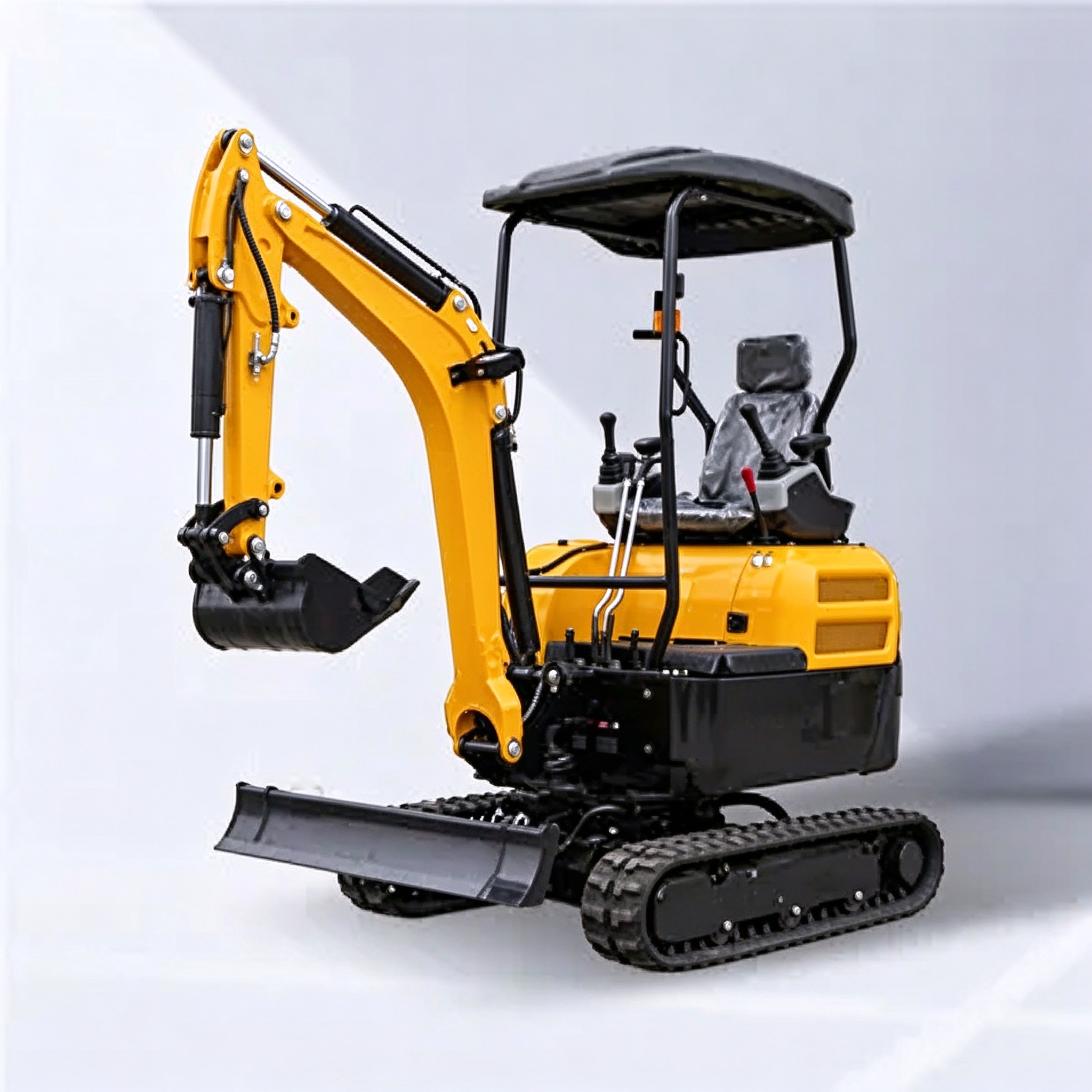
Quick answer
For most international buyers, the correct mini excavator is the smallest and lightest model that safely completes the required digging, lifting and attachment work. Confirm the machine’s dimensions against access gates and trailer limits, verify that hydraulic flow matches the planned attachments, and require destination-market certification and a pre-shipment inspection before placing a bulk order.
Best starting point: collect the job width, required digging depth, soil condition, expected daily hours and transport vehicle dimensions. Give those details to the manufacturer so the quoted configuration reflects the actual site rather than a generic model.
Mini excavator size by application
Machine classes overlap between manufacturers, so always compare the published operating weight, dimensions and performance data.
| Operating class | Typical applications | Advantages | Main considerations |
|---|---|---|---|
| 1–1.8 tons | Residential landscaping, narrow trenching, utility repairs, garden work | Compact footprint, easy transport, low site impact | Limited lift capacity and digging depth |
| 2–3.5 tons | General construction, foundation work, drainage, small demolition | Strong balance of reach, stability and transportability | Confirm trailer capacity and access width |
| 4–6 tons | Road maintenance, heavier earthmoving, agriculture, rental fleets | Higher digging force, lift capacity and attachment flexibility | Larger transport vehicle and wider working area |
These categories are a starting point rather than a strict specification. Safety, local transport rules and the manufacturer’s load chart should always take priority.
Step 1: Match the machine to the work envelope
Do not choose an excavator only by horsepower. Start with the work envelope:
- Maximum digging depth: add clearance for the bucket, trench base and operator tolerance.
- Dump height: confirm the machine can safely load the trucks, trailers or hoppers used on site.
- Swing radius: check how much space is required near walls, fences and road traffic.
- Digging force: consider compacted soil, clay, gravel and repeated breaker use.
- Lift capacity at reach: use the manufacturer’s actual load chart, not the bucket breakout force alone.
For landscaping and utility contractors, a narrow machine often improves access and reduces surface damage. For aggregate yards, demolition and road maintenance, a heavier model may be more productive even if it costs more to transport.
Step 2: Check the attachment and hydraulic system
The hydraulic system determines how effectively the excavator can use a breaker, auger, thumb, rake, grapple or grading bucket.
Before ordering, ask for:
- Standard and optional hydraulic flow and pressure
- Number and type of auxiliary hydraulic circuits
- Quick-coupler type and attachment pin dimensions
- Recommended maximum attachment weight
- Wiring and control method for two-way or proportional circuits
A machine with low hydraulic flow may operate a bucket efficiently but perform poorly with a breaker or earth auger. If attachments will be added later, specify the required auxiliary circuit at the factory rather than relying on a field retrofit.
Step 3: Confirm transport and site access
Transport is a common hidden cost in excavator ownership. Measure the following before comparing quotations:
- Minimum access-gate width
- Trailer deck length and payload rating
- Tow vehicle capacity
- Transport width and height
- Shipping weight and loading method
Do not assume that a machine can be moved by the same trailer as a smaller rental unit. A full-container order also needs a loading plan that accounts for bucket position, attachment packaging and axle-weight limits.
Step 4: Verify engine and market compliance
Certification requirements vary by country and application. Buyers should confirm the exact final configuration before ordering, especially for imported equipment.
AUTO MACHINERY offers CE and EPA engine configuration options depending on the destination market. Buyers should confirm the required emission package, machine plate, manuals and documents with the factory before shipment. Local registration, road use and worksite rules should also be checked with the relevant authority.
Useful documents to request include:
- Product specification sheet and configuration list
- CE declaration where applicable
- Engine documentation and identification details
- Pre-shipment inspection report
- Packing list, loading photos and shipping documents
- Operation and maintenance manuals
Step 5: Compare the total landed cost
The purchase price is only one part of the budget. A factory-direct quotation should clearly separate:
- Machine and attachment price
- Packaging and inland transport
- Port charges and ocean freight
- Insurance
- Import duty and taxes
- Destination delivery and unloading
- Warranty, spare parts and service support
Ask whether the quotation is FOB or CIF, what the price includes, and which costs remain payable at the destination port. Comparable quotations use the same Incoterms and the same machine configuration.
What to inspect before shipment
International buyers cannot easily return a machine because of a missed detail, so verify the following before final payment:
- Machine serial number matches the invoice and certificate.
- Engine, hydraulic components and attachment configuration match the approved specification.
- All functions operate through a complete cold-start and working-cycle test.
- Hydraulic hoses, cylinders, pins and pivot points are checked for leaks or damage.
- Paint, decals, safety labels and protective guards are complete.
- Bucket and attachment pin sizes match the quick coupler.
- Loading photos show the final machine and packaging before the container is closed.
- Spare-parts list and recommended first-service items are included.
For repeat orders, keep the approved specification sheet with the purchase order and request the same document for every production batch.
Common mistakes when buying a mini excavator
- Buying by price alone: the lowest price may exclude freight, attachments, certification or spare parts.
- Ignoring transport width: a slightly larger machine may require a different trailer or transport permit.
- Upgrading horsepower without checking hydraulics: engine power does not guarantee breaker or auger performance.
- Assuming certification is automatic: confirm the exact destination-market configuration.
- Skipping the pre-shipment inspection: photos and a functional test are cheaper than correcting a problem after arrival.
- Ordering unsuitable attachments: pin diameter, coupler type and hydraulic flow must be matched before production.
Why source compact machinery from Ningbo, China?
Ningbo and the surrounding Yangtze River Delta region form a mature manufacturing and export ecosystem for compact construction machinery. AUTO MACHINERY produces mini excavators, skid steer loaders, wheel loaders and remote-control mowers in a 48,000 m² facility in Ningbo, Zhejiang, China, serving customers in more than 20 countries.
Factory-direct purchasing lets the buyer confirm the machine configuration, attachments, inspection process and loading plan with the production team. The website lists compact excavator options from 1–6 tons, with CE and ISO 9001-related quality processes and OEM/ODM support.
| AUTO MACHINERY fact | Detail |
|---|---|
| Location | Ningbo, Zhejiang, China |
| Production experience | Since 2018 |
| Mini excavator range | 1–6 tons |
| Export markets | 20+ countries |
| Quality and compliance options | CE, ISO 9001 processes and EPA engine options by market |
| Production model | Factory-direct and OEM/ODM |
Questions to send to a mini excavator supplier
Copy these questions into an inquiry to reduce back-and-forth:
- What are the operating weight, transport width, transport height and swing radius?
- What are the maximum digging depth, dump height and rated lift capacity?
- What hydraulic flow and auxiliary circuits are included?
- Which attachments can the machine safely operate?
- Which engine, emission package and certification are offered for my country?
- What is included in the FOB and CIF quotations?
- Can you provide a pre-shipment video and inspection report?
- What spare parts and service information are included with the order?
Frequently asked questions
Are 1–2 ton mini excavators suitable for commercial work?
Small machines can be productive in landscaping, trenching, utility repairs and property maintenance. The decisive factors are required digging depth, daily workload, attachment demand and access constraints. A contractor with repeated heavy digging should compare a larger model before buying.
How much does a mini excavator cost?
Pricing depends on size, engine, hydraulics, attachments, certification and shipping destination. A responsible quotation should list the complete configuration and Incoterms. Comparing only the machine price can produce a misleading total landed cost.
Is a mini excavator better than an excavator?
A mini excavator is usually better for tight access, light transport, landscaping and urban work. A larger excavator may be more productive for deeper excavation, heavy lifting and continuous high-volume earthmoving.
Can I use a breaker or auger on a mini excavator?
Most models can support auxiliary attachments when the hydraulic flow, pressure, coupler and control system are specified correctly. Confirm the attachment limits with the manufacturer before ordering.
What certification should I request?
This depends on the destination market and product configuration. Buyers should ask the manufacturer to confirm CE, EPA or other required documentation in writing and verify local import rules before shipment.
Can buyers request factory inspection photos and videos?
Yes. Ask for functional-test video, component photos, serial-number verification, attachment fit checks and container-loading photos. Include these inspection points in the purchase order.
Need help selecting a compact excavator?
Send the following details to the AUTO MACHINERY export team for a factory-direct quotation:
- Required digging depth and transportation width
- Soil or material type
- Planned attachments
- Expected workload and quantity
- Destination country and port
- Required CE, EPA or other certification
Request a mini excavator quotation.